
When a US industrial project demands heavy bridge cranes, irregular geometry, or architecturally exposed framing, conventional structural steel is the only answer – and Colony Construction is the single-source partner that delivers it. Since 1985, across 700+ projects, we have fabricated and erected heavy-industrial steel for mining mills, hydroelectric powerhouses, chemical plants, and civic venues. Every structure is designed to AISC 360-22, welded to AWS D1.1:2020, fabricated from ASTM A992 wide-flange and ASTM A500 HSS sections, and erected under OSHA 29 CFR 1926. We build what pre-engineered kits cannot.
Conventional Steel Construction Expertise
Conventional steel construction – also called structural steel construction – is the engineered design and fabrication of a building using standard hot-rolled W-sections, HSS, plate girders, and built-up members sized member-by-member for the specific loads of the project. Unlike a PEB, every beam, column, and connection is individually analyzed, which makes conventional construction the right choice for heavy-industrial facilities with 100+ ton bridge cranes, tall process headhouses, deep foundations, or exposed architectural frames. Colony’s in-house engineering team runs full AISC 360-22 analyses, seismic design to AISC 341, and connection prequalification for Seismic Design Category D and E sites in California, Alaska, and the Wasatch Front.
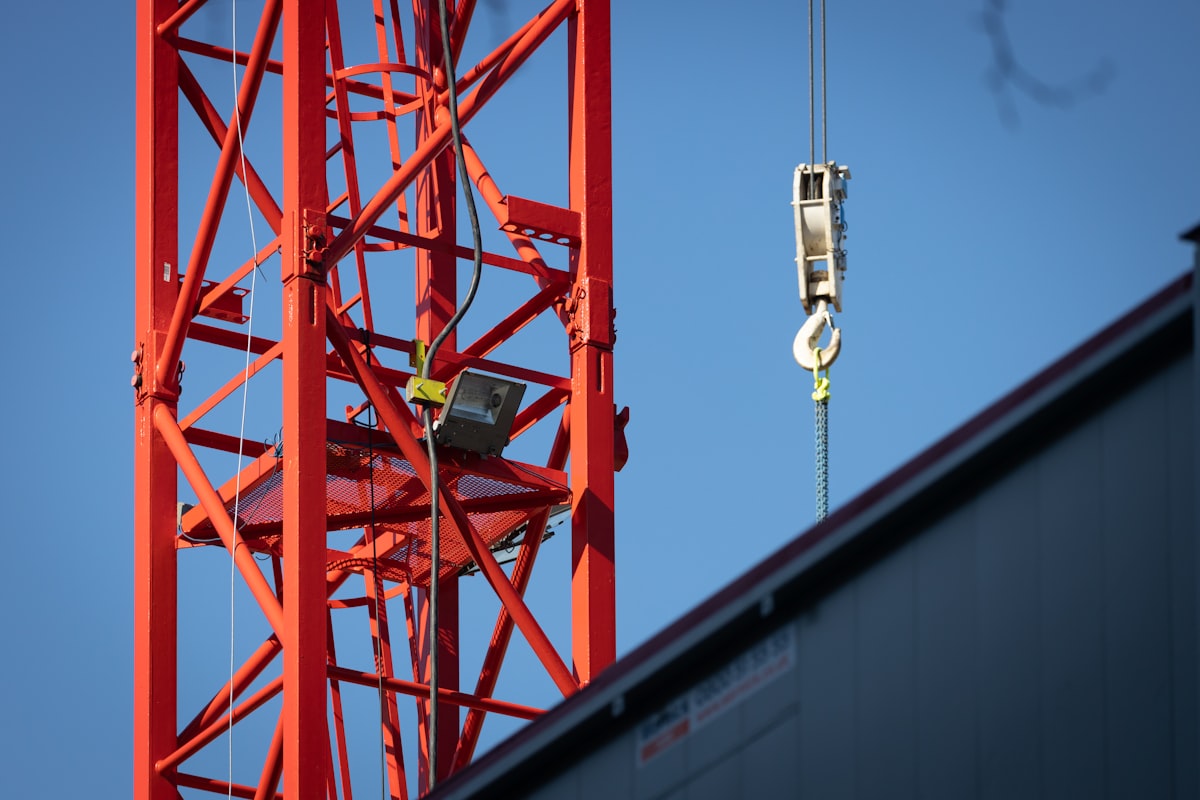
Our Surrey, Kelowna, and Edmonton shops are equipped to fabricate individual members up to 50 tons, with full AESS (Architecturally Exposed Structural Steel) capability to AISC 303 Categories 1–4 for US civic, sports, and signature-industrial projects. On a Colony conventional steel job, nothing is catalog – every connection is engineered, every plate detailed in Tekla Structures, and every weld inspected against AWS D1.1. US clients rely on that rigor for Nevada gold-district mill buildings, Pacific Northwest hydroelectric powerhouses, Gulf Coast chemical plants, and Rocky Mountain ski-resort lodges where neither the loads nor the geometry can be standardized.
Industries We Serve with Conventional Steel Construction
- Mining Construction – mills, crusher buildings, conveyor galleries, and headframes for Nevada gold, Utah copper, and Colorado molybdenum operators on active hard-rock sites.
- Hydroelectric Construction – plate-girder powerhouses, intake structures, and penstock supports for Bureau of Reclamation contractors and Pacific Northwest utilities.
- Oil & Gas Construction – pipe racks, compressor buildings, and modular process structures for Permian Basin producers and Gulf Coast LNG developers.
- Manufacturing & Warehousing – heavy process plants with integrated bridge cranes, mezzanines, and equipment platforms for Tier-1 automotive suppliers and EV/battery developers.
- Sports & Recreation Construction – long-span roofs and AESS frames for D1 athletic venues, municipal rec centers, and Colorado / Utah ski-resort day lodges.
Challenges We Solve
100+ Ton Bridge Cranes and Dynamic Process Loads
Mining mills, steel plants, and ports routinely specify bridge cranes well beyond what a PEB system can carry. Colony regularly designs runway structures for 50, 100, and 200+ ton cranes, with CMAA 70/74-compliant girder design, fatigue analysis per AISC Appendix 3, and impact factors that account for hard service cycles. Our 50-ton shop-handling capacity means we fabricate the heaviest members in-house without outsourcing.
AISC 341 Seismic Detailing for SDC D and E Sites
California, Alaska, and the Wasatch Front push most structures into Seismic Design Category D or E, where ductile connections, drift limits, and special-moment-frame prequalification become governing. Colony’s engineers detail AISC 341 SMF, IMF, OMF, SCBF, and BRBF connections routinely, coordinate with third-party peer reviewers, and produce stamped drawings that pass plan check on the first pass.
Architecturally Exposed Structural Steel (AESS) Finish
On civic projects, sports venues, and signature industrial fronts, exposed steel must look the way the architect drew it. Colony produces AESS steel to AISC 303 Categories 1–4, with hand-ground welds, continuous seams, and shop-applied finish coatings. Our QC program captures every weld, bolt, and splice that will be visible – because there is no hiding a cold joint on an exposed diagonal.
Heavy Plate-Girder Framing for Hydro and Process Work
Hydroelectric powerhouses, penstock supports, and high-load industrial framing push beyond available rolled shapes. Colony fabricates built-up plate girders and box sections with full CJP welds, MT / UT / PT inspection per AWS D1.1 clause 8, and mill-cert traceability from ASTM A709 / A572 plate through to the installed member.
Long-Term Adaptability for Capital-Intensive Facilities
Owners investing in 40-year industrial facilities need a structural frame that can be expanded, retrofitted, or re-equipped without being locked into a proprietary PEB package. Conventional steel built to AISC standards gives owners that future – additional bays, heavier cranes, second-floor mezzanines, or process relocations can be engineered in decades later without tearing out the primary structure.
Projects We’ve Delivered

Diavik Diamond Mines
Colony delivered conventional steel construction for this remote Arctic diamond operation, including heavy process-plant framing engineered for sub-Arctic temperatures and demanding process loads. Representative of the heavy mining-mill work Colony delivers for Nevada and Alaska remote hard-rock operators.

Mayo B Powerhouse
A hydroelectric powerhouse requiring plate-girder and heavy-section framing that only conventional steel construction could deliver. Colony provided engineering, fabrication, and erection in a logistically challenging northern environment – directly applicable to Columbia River, Snake, and Bureau of Reclamation rehabilitation work.

Seastar Chemicals
Colony built a custom steel building for this specialty chemical manufacturing facility, combining heavy process-floor framing, chemical-resistant detailing, and a conventional structural frame engineered around sensitive laboratory operations. Representative of the California and Texas Gulf Coast process work Colony targets.
Frequently Asked Questions
When should a US project choose conventional steel over a PEB?
Choose conventional when loads are heavy (100+ ton cranes, large process equipment), geometry is irregular, architectural finish matters, or the building will be adapted over decades. PEBs excel at standard rectangular envelopes with predictable loads. Colony offers both and will recommend the approach that fits the project, not our shop schedule.
What load capacity can Colony handle – cranes, process loads, impact?
Colony regularly designs and fabricates for 100+ ton bridge cranes, heavy process modules, and the vibration and impact loads typical of mining, hydroelectric, and heavy chemical work. Individual members up to 50 tons are fabricated in-house, and we have delivered plate-girder assemblies well beyond that on site-assembled segments.
What are typical lead times for a heavy structural steel project in the US?
Engineering typically takes 6–12 weeks, fabrication 8–20 weeks depending on tonnage, and erection varies with site conditions. A mid-size conventional steel building runs 8–14 months end to end. Colony locks milestones contractually so procurement, civil, and commissioning teams can plan around firm dates.
How does the engineering process align with AISC 360-22 and IBC?
Our engineers begin with architectural and process loads, develop a structural concept, run full analysis (gravity, wind per ASCE 7, snow, seismic), design every connection, and issue stamped drawings. On complex projects we integrate with owner engineers and third-party peer reviewers, coordinate with state-licensed US PEs for stamping, and deliver to IBC as amended by the governing AHJ.
How does Colony approach AESS for US civic and sports venues?
We follow AISC 303 Code of Standard Practice AESS Categories 1–4, with tolerances, weld finish, and coating standards scaled to the visibility and viewing distance. On D1 collegiate projects and ski-resort day lodges, we coordinate with the architect during detailing to lock finish decisions before steel hits the shop floor – avoiding field rework on exposed members.
Start Your Conventional Steel Construction Project
Send us your scope, schedule, and site details. A Colony estimator will review your project and reply within one business day.